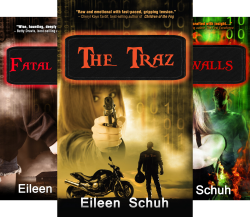
Showing posts with label Fatal Error. Show all posts

Sunday, March 22, 2020

First steps out of the Covid19 crisis

[disclosure]

Find the words

The overwhelming response to my casual mention on facebook that I was considering using my writing skills and psychiatric nursing training to blog about mental health issues caught me by surprise.

Social media had been next to silent on the crisis since the magnitude of the pandemic became apparent. I assumed most, like me, were glued to news channels, unable to comprehend what was happening.

When one did speak, one used words like 'surreal'. We were numb, felt detached. Had difficulty connecting the world we were hearing about with the one we were experiencing, connecting the past we knew to the future that was looming.

However, the response to my post led me to realize we were emerging from the numbness but had no idea what we should do next, what to feel next or worry about next.

We will all handle this crisis in our own unique way,  much as we handle grief. There is no right and wrong way to feel. No right or wrong time to do what we want to do. No correct way to proceed.

And that, in itself, is frightening.

But let's take a tiny first step out of our numbness and see where it leads us. It's not an easy step, but it's manageable. 

Step 1: find the words for what you're feeling. Put words to your fears.


In FATAL ERROR, my young heroine is being interrogated by the police about a murder she witnessed. She's never talked to anyone about what she saw. She'd been hoping she could just forget about and thus make it go away. She's not even sure she did see anything, or what exactly she saw or did...because she'd never put words to it.
“Dark secrets are bad things,” [Constable] Debra said. “They can grow into monsters if you don’t put them into words.”
“There are no words,” Katrina protested. 
“You’ve never talked about it, have you?” Debra asked. “I can tell by the way you flinch every time someone says ‘murder’.” 
“Words will make it worse.” 
“I don’t think so. If you have the word ‘murder’ you can have suspects, evidence, motive, opportunity. You can have trials and convictions and jail terms, tangible things to chase down and handle. If you just have a bunch of horrible feelings floating around, how do you do anything with them?” 
“Words will make it real.” 
“It’s not words that make it real.” [Cst.]Chad zeroed his eyes in on hers. “With or without your words, the murder was real. I can show you the crime scene photos. You can see how ‘real’ it was. ~Fatal Error
It's vital we find the words to express what we are going through. Only by being able to communicate will we be able to connect with others. With words, we can climb out of our solitude and share our fears and feelings.

Yes, words will definitely 'make it real'. Words will knock us upside the head with the harshness of the reality, the 'new normal'.

However, with words we can proceed, start making plans, research solutions,  create solutions. Words will enable us to analyze. Words will empower us to take control of our emotions.

In a scientific study on Post Traumatic Stress Disorder (PTSD), survivors of a near-crash involving a passenger flight were interviewed by researchers. Some interesting data emerged. (see my previous blog about this)

Researchers simply asked survivors to describe what had happened.  Those who had words for the terror they experienced, those who could focus on and share the event and the feelings they had during that event were less likely to suffer PTSD. Whereas those passengers with evasive or convoluted narratives, focusing on extraneous things had more trouble dealing with the terror of the experience down the road.

While researchers suggested this was useful data for those training first responders, soldiers, or others who are likely to encounter trauma during their work, it is also information we can use to face the Covid19 crisis.

Don't pretend it's not happening. Don't think that putting words to it will make it real, make it worse. Don't think not talking about it will make it go away.

Putting words to that undefined 'it' is a vital first step.

Feel free to share your feelings, fears, hopes in the comment section below or on my facebook page, where I'm hosting a running commentary on mental health issues. And if you're still at that 'surreal' stage and can't find the words, share that to. Reading others' words may help you find your own.

Take care.

#We'reInThisTogether

For reliable, accurate and timely health and safety information on dealing with the Covid19 pandemic visit this Canadian Government website.

"First steps..." has been brought to you by FATAL ERROR


"Courage and insight make for a compelling read” 

 "Gave me much to think about."

“...excellent pacing. It's a worthy sequel to the explosive ‘THE TRAZ’.” 

“...a lesson and an intense drama in one.”  

Eileen Schuh, Author 
FIREWALLS
FATAL ERROR
Schrödinger's Cat
THE TRAZ
Web site: http://www.eileenschuh.com
Blog: http://eileenschuh.blogspot.com

Monday, November 27, 2017

Unnecessary Redundancies

Déjà vu all over again...

I mentioned in my last blog that I had re-released THE TRAZ and FATAL ERROR, the first two novels in my BackTracker crime series. 

In addition to astounding new covers (thanks, Cathy at Avalon Graphics), a fair amount of editing and revisions took these books up a notch. 

https://www.amazon.com/gp/bookseries/B00VIXAZQM/ref=dp_st_0995297525

Thanks to my editor, Elaine Denning, some of those improvements involved 'tightening the writing', which in layman's terms, means getting rid of the unnecessary. Those who produce Readers' Digest Condensed versions are masters at this craft.

Here are my top ten pet redundancies that I often find in my writing as well as in others'. The unnecessaries are highlighted.


10. No Trespassing Without Permission
 9. She sat down in the chair (or laid down on the bed.)
 8. She looked up at the sky 
 7.  "Stop!" he yelled loudly. "Don't you dare!" she warned.
 6. He put the car in reverse and backed up
 5. She closed her eyes and went to sleep.
 4. It reminded her of memories of her childhood.
 3. "We do not feed our cattle steroids or hormones."
 2. I'm Canadian, eh? or I'm Canadian, eh?
 1. They found a dead body behind the school.


Eileen Schuh, Author
FIREWALLS
FATAL ERROR
Schrödinger's Cat
THE TRAZ
Web site: http://www.eileenschuh.com
Blog: http://eileenschuh.blogspot.com
 

Friday, November 24, 2017

New and Improved!

THE TRAZ & FATAL ERROR

Back in January, six years after THE TRAZ was released, I deemed it ready for a makeover. This thrilling crime novel was not only the first is my BackTracker series, but my debut novel—the first book of mine ever published.
Ah, the thrill of holding that paperback in my hands, seeing my name on the cover, inhaling the intoxicating smell of its freshly-printed pages. The sound when I riffled the pages.


After publishing THE TRAZ, I went on to publish FATAL ERROR Book 2, FIREWALLS Book 3, and OPERATION MAXTRACKER Book 4 and SHADOW RIDERS, a novel that runs parallel to my series. Also during this time, WolfSinger Publications out of Colorado published my two science fiction novellas, SCHRODINGER’S CAT and DISPASSIONATE LIES.

My experience as a writer expanded and my writing abilities, bloomed. Although never embarrassed by those earlier releases, I had an intense desire to revisit them, improve them, and make my series more cohesive from start to end.

I spent 2017 doing just that and have now completed the exercise. The second editions of both THE TRAZ and FATAL ERROR are now on the market in both ebook and paperback formats. Doing the revisions was a lengthy and difficult, but passionate exercise, topped with the skilled editing help from Elaine Denning and stunning new covers by Cathy over at Avalon Graphics.

Although the first edition of FATAL ERROR is no longer available for purchase, the first edition of THE TRAZ is. I suggest aspiring novelists may want to purchase both books and compare them to see firsthand the difference powerful, skilled, keenly-edited writing can make to a story.

Right off the top (after noticing the new cover), readers will see the difference a powerful opening page makes. CHAPTER I of the second edition of THE TRAZ effectively introduces not only the novel but the series. It creates a glorious sense of suspense that doesn’t ease until the final chapter. It’s full of danger, anticipation, and fear.

This scene came to me in a dream and is what started me writing this series. Every night, it appeared to me, but would never advance. The vision would end before I knew who that young girl on the ridge was, what she was doing, and what danger pulsed through the scene.

Because of the difficulties of starting a series in the middle of a drama, which is where this scene takes place, editorial decisions led to cutting that initial scene. The power it had over me, however, was never forgotten.

By comparing the two editions of THE TRAZ, you can decide for yourself how effective that change to the opening chapter is, as well as examine the effect other revisions have on the novel.

If you have purchased FATAL ERROR in the past, you can get the re-release and compare those two books as well.

If you have any comments or suggestions on the revisions, I’d love to hear from you!
New and Improved has been brought to you by the BackTracker series.
https://www.amazon.com/gp/product/B076ZP2M8P?ref=series_rw_dp_labf


Friday, November 3, 2017

Unbecoming of a leader


For our Governor General Julie Payett to scoff at people who have a different belief system than the one she’s chosen for herself, is decidedly not becoming of a Canadian leader.

When the future of the world could very well depend on all of us promoting understanding, respect and tolerance among people of differing cultures and beliefs, her speech rang crass.

We all choose our beliefs, as she has chosen hers and she has a right to her beliefs and a right to promote those beliefs, as do the rest of us.  But it is not becoming of her or any of us to consider ourselves more intelligent, more worthy, more valuable, wiser than others because of our beliefs.  And when she scoffed at people with different beliefs than hers, she sent the message she feels superior to them.

She was not just scoffing at the beliefs, but the believers which makes it even harder to accept.

That she has chosen science as her religion, makes her no better than anyone who hasn’t. And yes, we do choose our beliefs. Anyone of us could choose be an atheist, a Muslim, a Christian, or a follower of Judaism.

That she says her choice to believe in science makes her better than others, displays a lack of wisdom, a misunderstanding of humanity, an ignorance of the science of the human nature. The fact is, for many people, spirituality is a fundamental need.

Both science and religion have given us blessings as well as curses. Science does not hold a superior moral standing to religion, for after all it is science that gave us nuclear weapons...and greenhouse gases. She would do well to also study the science behind the sugar pill and the mind. The evidence supporting the existence of their power might surprise her.

We need to respect each other and each other’s’ belief systems. Yes, we should all feel free to discuss our beliefs, argue them, explore them, believe them the best—but we have no license to deride people who believe differently than us, or to believe ourselves superior to them.

Your Excellence Madam Payett, science without heart is an empty vessel indeed—perhaps even a dangerous one. 

http://myBook.to/FatalError
"Unbecoming of a leader" has been brought to you by FATAL ERROR


Wednesday, October 11, 2017

Whatsup?


It’s that dreaded time in an author’s life when a project is nearing completion. Dreaded because one hates to let one’s characters and stories go off on their own into the big, wide, scary universe. And dreaded because it means one must refocus.

With FATAL ERROR the 2nd edition off to the cover designer (Avalon Graphics) and formatter (e B Format) I ponder my future.

I have not been as successful a writer sales-wise as I’d have liked. There have been many rewarding aspects to this career—sales not being one of them.  It costs a lot in time and money to write, publish and promote books and after 8 books, both traditionally- and self-published, financial success has not followed.

It’s not that I’m starving (I have other revenue sources) but the common measurement of success in my part of the world is a monetary one. Not achieving monetary success lends itself to creating a feeling of failure.

Despite that, I am doing what I have to do, compelled to continue. Obsessed. There are many life pursuits that are detached from financial gain, and writing, for me, is one of them. 

Many hobbies score low on the financial value scale—gardening, knitting, cooking. As do other activities such as raising children and doing volunteer work (hours of it for many).

My novels are my spiritual contribution to the world, my commentary on people and their lives, on social values and political influences. My books are my immortality.

So what’s up for me?  There is always the next book in The BackTracker Series, drafted and ready to refine (I have several sequels on my hard drive). There is my NaNoWriMo project. (National Novel Writing Month –which is November and is the month in which one is supposed to complete a novel. Traditionally, for me, it takes 3 years-worth of Novembers to get a novel done!) My current ongoing NaNoWriMo project is a triology of scifi novelettes, written in past years and now ready to refine.
Then there is my nagging desire to write a Literary Novel.

I have heard ‘literary novel’ defined as a novel wherein characters which one cares little about are doing things in which one is not very interested.

It’s not a flattering definition, but one with which I feel a kinship. I’ve never much liked reading literary novels but they are the ones that get all the attention and awards.

Literary works encompass the classics and the Shakespearean and Margaret Atwood’s Handmaid's Tale. 

What sets apart a literary work is the writing. Whereas I have until now done my best to make my writing disappear beneath the story and the characters and the plot and dialogue, in a literary novel the writing itself is an integral part of the book.  Everything from word-choice, to cadence, to sentence structure, to symbolism comes into play. Powerful words are used to create scenes and define characters. The writing almost becomes a character itself, driving the plot, setting the scene, and creating the emotions.

Literary novels are sort of like poetry, but not totally the same. They can be beautiful and can be ugly. They can have abrupt endings, logical endings or no endings. They can be historic or futuristic or every day. But, always, they make a social comment. They change the way their readers think. They wring out readers’ emotions.They can inspire and they can depress. Sometimes they deaden. They are quotable. They strongly affect all who read them.

They change the world—one word at a time.

Literary novels tend not to make the mainstream, tend not to place on best-seller charts. They are reserved for book clubs, schools and universities, and the very best of the New York Times reviewers. They tend to win Giller Prizes and the like.

I want to write a literary novel for perhaps the same reason that comic actresses long for dramatic roles, why Sally Fields went from The Flying Nun to Norma Rae. I want to be taken seriously as an author, I want to grow my writing abilities. I want to do more for the world than merely entertain. 

I want to learn how to make a difference.

Whatsup? Is brought to you by OPERATION MAXTRACKER 


http://mybook.to/OperationMaxTracker


Her genius might save the world but who will save her children?